INITIATIVES
Saint Clair River Delta Ramsar Designation
TLC Program and Stewardship Assistant New TLC Program and Stewardship Assistant, Teddy Wiley, is heading an effort to nominate the Saint Clair River Delta for designation as a Ramsar Wetland of International Importance.
The Ramsar Convention on Wetlands is one of the oldest modern global intergovernmental environmental agreements. It was negotiated in the 1960s by countries and non-governmental organizations concerned about the increasing loss and degradation of wetland habitat for migratory waterbirds. The treaty was adopted in the Iranian city of Ramsar in 1971 and became effective in 1975. A key provision of the treaty is to identify and place significant wetlands on a list of Wetlands of International Importance, also known as the Ramsar List. Criteria for listing include representative, rare or unique wetland types, and various aspects emphasizing the importance of biodiversity. The list includes an international network of wetlands which are important for the conservation of global biological diversity and for sustaining human life through the maintenance of their ecosystem components, processes and benefits or services. There are now 2,400 Ramsar wetland sites across the world. Designation of the Saint Clair River Delta as a Ramsar Wetland of International Importance should provide additional funding opportunities and help motivate all stakeholders to better protect the delta’s ecological character.
More funding is desperately needed to control invasive Phragmites Reed, among other invasive weeds, which has eliminated nearly all of the native vegetation and severely degraded wildlife habitat of vast areas of wetland along the Great Lakes. More complete control of invasive Phragmites would eventually lead to restoration of the Saint Clair River Delta ecosystem as a whole. There are currently only four Ramsar etlands in our general region, including the Saint Clair National Wildlife Area on the eastern shore of Lake Saint Clair, Humbug Marsh in the Detroit River International Wildlife Refuge along the west shore of the Detroit River, Point Pelee National Park on the north shore of Lake Erie, and Long Point National Wildlife Area also on the north shore of Lake Erie. As for designated Ramsar wetlands in general, the US has relatively very few compared to other parts of the world.
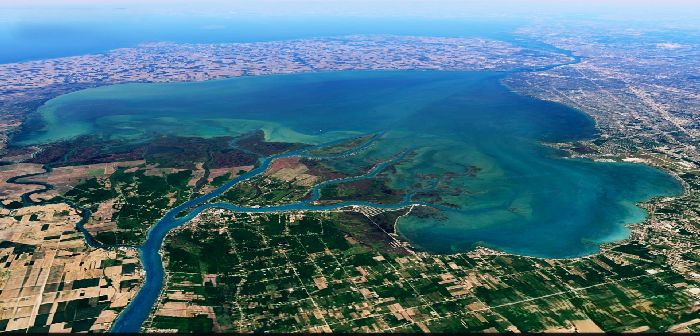
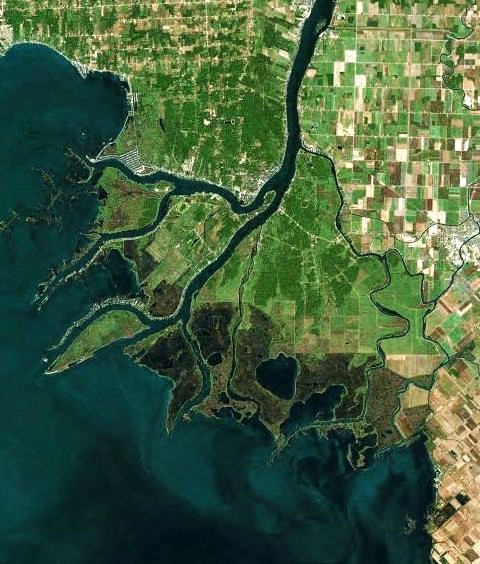
The Saint Clair River Delta is located at the northeast corner of Lake Saint Clair at the confluence of the Saint Clair River and consists of Saint John’s Marsh, Dickinson Island, Harsens Island, Seaway Island, Bassett Island, Squirrel Island, Walpole Island, and Saint Anne’s Island. The delta is fed by the waters of Lake Huron where it eventually empties out into the shallow Lake Saint Clair. The delta’s overall size of approximately 32,000 acres and location between two freshwater lakes makes it one of the largest freshwater deltas in North America and the only major river delta in the Great Lakes basin. Saint John’s Marsh and adjacent islands are important ecologically because they providecritical habitat for a myriad of game and non-game species that depend on coastal wetlands such as ducks, geese, swans, reptiles, amphibians, mammals, and the many species of invertebrates and plants that support them. The delta is home to rare plant communities including Great Lakes marsh, lakeplain wet prairie, lakeplain wetmesic prairie, and lakeplain oak openings. Lakeplain prairie historically covered most of the delta, a species-rich plant community that occurs on seasonally wet ground of glacial lake plains and similar formations.
Prior to Euro-American settlement, lakeplain prairie covered about 158,000 acres in Michigan, or only about 0.4% of the land area of the entire state as estimated by the Michigan Natural Features Inventory using General Land Office notes from the first Michigan surveys in the 1800s. Most prairies in Michigan were first to be drained and cropped because the need for tree clearing was minimal and the ground was rich. Any remaining patches were fire-suppressed, becoming severely degraded and fragmented. Today, only about 1,250 acres of lakeplain prairie remains, or just 0.8% of the original acreage. In other words, 99.2% of the lakeplain prairie in Michigan has been destroyed in roughly the past 200 years.
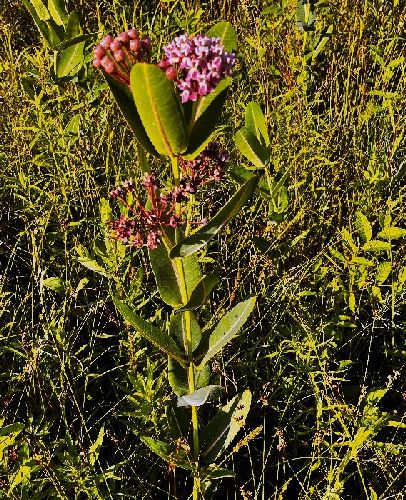
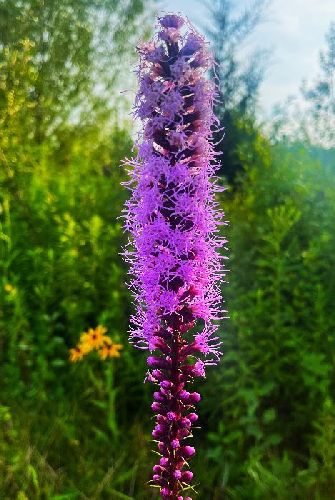
Despite all this, the Saint Clair River Delta still contains high quality remnants of lakeplain prairie and oak openings. These communities are extremely diverse, with sometimes over 200 plant species occurring in a single remnant. Numerous rare species that depend on lakeplain ecosystems have been documented within the lakeplain prairie within Saint John’s Marsh and adjacent islands.Rare animal species associated with the the Saint Clair River Delta include: Michigan Endangered King Rail; Michigan Threatened Black Tern, Spotted Turtle, Leafhopper, Common Gallinule, Least Bittern, Eastern Fox Snake, Forster’s Tern, and Common Tern; and Michigan Special Concern American Bittern, Marsh Wren, Blanding’s Turtle, and Blazing Star Borer. Rare plant species associated with the Saint Clair River Delta include: US Threatened and Michigan Endangered Prairie White-fringed Orchid; Michigan Endangered Gattinger’s Gerardia, and Skinner’s Gerardia; Michigan Threatened Sullivant’s Milkweed, Small White Lady-slipper Orchid, Leiberg’s Panic Grass, and Short Fruited Rush; and Michigan Special Concern Three Awned Grass, Gentian-leaved Saint John’swort, Cross-Leaved Milkwort, and Tall Nut Rush.
The wetlands that make up the Saint Clair River Delta act like a giant sponge for the Great Lakes basin. Sediment deposition from the Saint Clair River is collected along the banks of the channels, which is then utilized by native vegetation and ultimately creates highly productive wildlife habitats. Excessive nutrients and other pollution discharged upstream of the delta are absorbed, assimilated, and remediated to some extent, improving the water quality of Lake Saint Clair and Lake Erie. Without the Saint Clair River Delta, flooding would become more damaging, water quality would diminish, and increased algal blooms would occur due to excessive nutrient loading. The Saint Clair River Delta is renowned for its recreational Smallmouth Bass fishing and waterfowl hunting, attracting hunters and fisherman from all over the state. The delta is also a popular birding designation for photographers and naturalists wanting to witness the thousands of migrating waterfowl. The shallow bays that surround Dickinson and Harsens Island, known as the Saint Clair Flats, are one of the biggest boating designations in the world. Raft-Off, an annual event in the Saint Clair Flats, almost broke the Guinness World Record for world’s largest boat tie-up ever in 2018, with about 3,000 boats tied up. The Walpole Island First Nation, known as Bkejwanong, “where the waters divide”, includes Seaway, Bassett, Squirrel, Walpole, and Saint Anne’s Islands. It is home of the Ojibwa, Potawatomi, and Ottawa tribes. These three tribes, along with the Mississauga, Nipissing, and Algonquin, are known as the Anishinaabe, or “the people”. The Anishinaabe are all culturally related, speaking one language called Anishinaabemowin. The Anishinaabe people have always had a close connection to the land, animals, and water. In their culture, it is important to walk in harmony with the world, connected to all parts of the land, with no separation between sacred and secular. It’s this reason why the people of Walpole Island have taken such good care of their land; making sure it is kept undamaged and productive for future generations to enjoy. Walpole Island’s local economy is dependent on the bounty of the land. Hunting, fishing, and trapping is a multi-million dollar industry in their community. Sweet Grass, a lakeplain prairie grass, is a sacred plant and is still used for smudging, basket making, and braiding. Northern Wild-rice, and the less common Michigan Threatened Southern Wild-rice, occur in the Great Lakes marsh of the Saint Clair River Delta and are also sacred plants collected for seed consumption.
Despite the significance of the Saint Clair River Delta and the countless benefits it provides, the delta’s wetlands are still being lost at an alarming rate. Ever since Europeans began settling here, much of the surrounding wetlands have been drained and filled in to make way for agriculture and residential development. The remaining wetlands on the delta are extensively dominated by invasive Phragmites Reed. Lakeplain prairie and Great Lakes marsh on Saint John’s Marsh and adjacent Islands are almost completely lost to invasive Phragmites. Lakeplain oak openings are being filled with invasive Japanese Barberry, Glossy Buckthorn, Common Buckthorn, and other
invasive weeds. The State has made little lasting progress in the fight against invasive Phragmites Reed across the Saint Clair River Delta due to lack of funding, equipment, and staff. There does not appear to be a recent management plan that addresses the extensive Phragmites cover. We hope that with Ramsar designation, the Saint Clair River Delta can become great again through more recognition and funding opportunities.
In late 2024 and early 2025, the TLC revised and updated a Saint Clair River Delta Ramsar presentation, which Program and Stewardship Director Teddy Wiley has presented to Clay Township and others. To view the latest Make Our Delta Great Again presentation, click here.